Best Headless CMS Platforms for Modern Web Development
Introduction
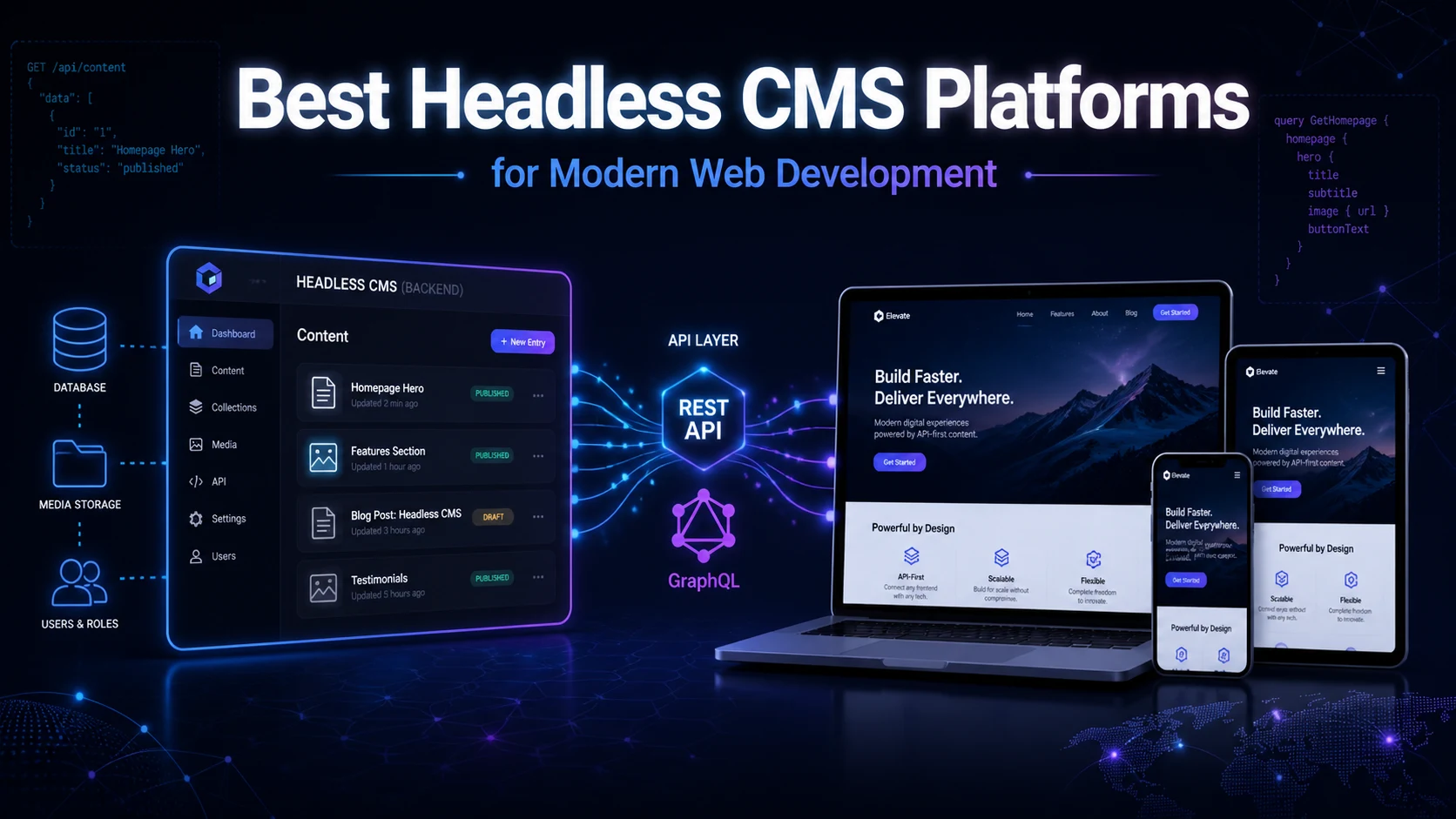
In the era of modern web development, traditional monolithic CMS platforms like WordPress are being replaced by headless CMS solutions. A headless CMS decouples the backend content management from the frontend presentation layer, offering flexibility, scalability, and improved performance. These platforms empower developers to create dynamic and engaging digital experiences by delivering content seamlessly across multiple channels, including websites, mobile apps, and IoT devices.
This article explores some of the best headless CMS platforms available today, highlighting their key features, benefits, and ideal use cases.
1. Strapi
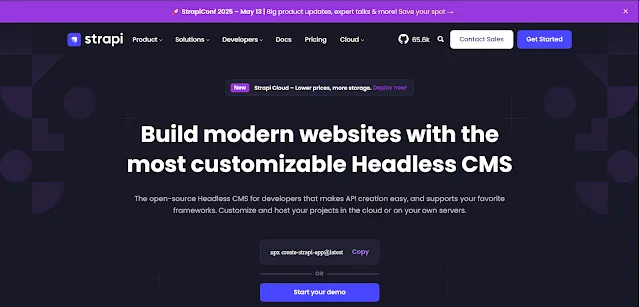
Strapi is an open-source, self-hosted headless CMS that provides complete control over API customization. It supports REST and GraphQL APIs, making it a popular choice among developers.
Key Features:
- Open-source and self-hosted
- Customizable API with REST and GraphQL support
- Role-based access control
- Supports multiple databases like PostgreSQL, MongoDB, and MySQL
Ideal for: Developers who want a customizable and self-hosted CMS.
2. Directus
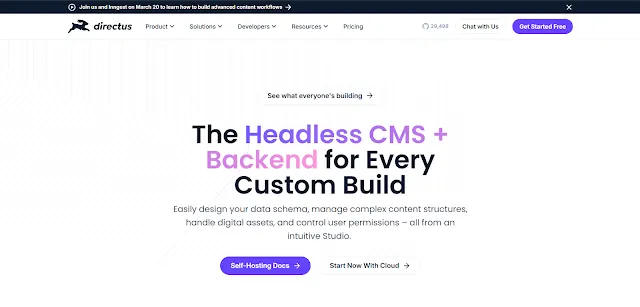
Directus is a real-time API-driven CMS that wraps around SQL databases. It provides a powerful and flexible way to manage structured content.
Key Features:
- API-first approach with REST and GraphQL support
- Works with any SQL database
- Extensible through hooks and modules
- Self-hosted and cloud-based options
Ideal for: Teams looking for a CMS that integrates seamlessly with existing SQL databases.
3. Ghost
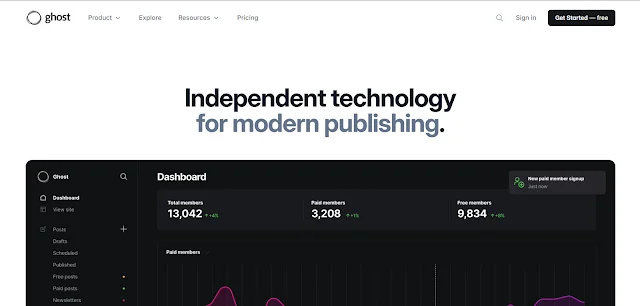
Ghost is a headless CMS specifically designed for content publishing. It is a favorite among bloggers and media publishers.
Key Features:
- Built-in SEO and membership features
- REST and GraphQL API support
- Minimalist and user-friendly interface
- Supports custom themes and integrations
Ideal for: Bloggers, writers, and content publishers who need a streamlined CMS.
4. Sanity
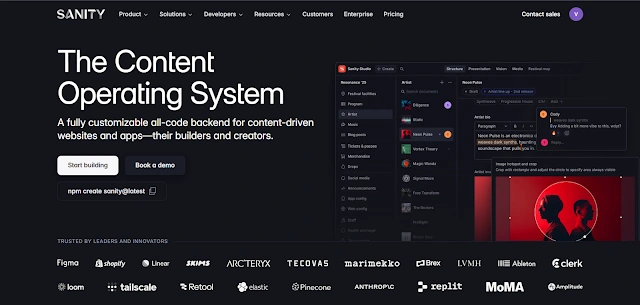
Sanity is a highly flexible, real-time CMS that provides developers with a structured content approach. It offers a robust API and a highly customizable editing environment.
Key Features:
- Real-time collaboration and content preview
- Customizable content studio with React
- GraphQL and REST API support
- Hosted and self-hosted options
Ideal for: Teams requiring real-time collaboration and structured content management.
5. Payload CMS
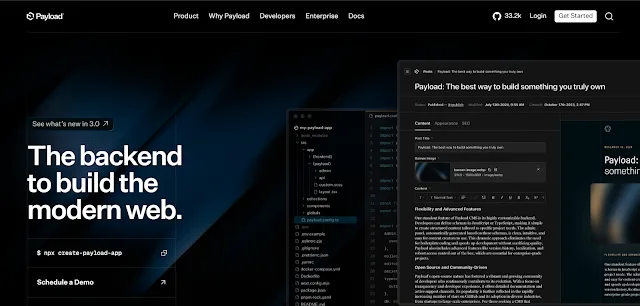
Payload CMS is a modern, self-hosted headless CMS designed for developers. It offers high performance and customization options.
Key Features:
- TypeScript-based API and flexible database support
- Advanced authentication and access control
- Rich content editing experience
- Customizable admin UI
Ideal for: Developers looking for a highly customizable and modern CMS.
6. Keystone
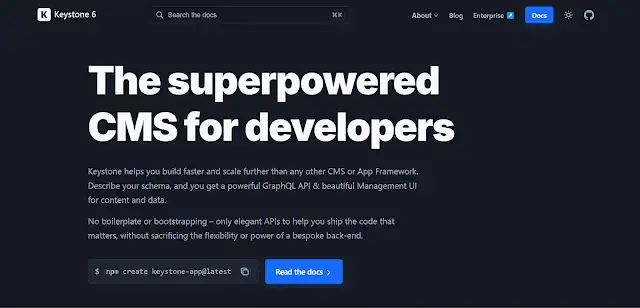
Keystone is an open-source headless CMS and GraphQL API that is built for flexibility. It allows developers to define custom schemas easily.
Key Features:
- GraphQL-native with a flexible schema
- Extensible with custom plugins
- Supports authentication and role-based access
- Works well with Next.js, React, and other frameworks
Ideal for: Developers building dynamic applications with GraphQL.
Other Notable Mentions
- Contentful – Enterprise-grade headless CMS with powerful API integrations.
- DatoCMS – Flexible and performant CMS with a great UI.
- ButterCMS – A lightweight and easy-to-use headless CMS for marketing teams.
- Prismic – A content API CMS with an intuitive UI and strong developer tools.
Conclusion
Choosing the right headless CMS depends on your project requirements. If you prefer an open-source and self-hosted solution, Strapi, Payload CMS, or Keystone might be ideal. If you need a cloud-based, scalable CMS, Sanity or Contentful could be better options. Bloggers and content creators may find Ghost the best fit. Evaluate your needs carefully and select the CMS that aligns best with your development workflow.
With the increasing demand for omnichannel content delivery, headless CMS platforms are becoming essential tools for businesses and developers alike. Whether you're building a personal blog, an enterprise-level application, or an e-commerce store, a headless CMS can provide the flexibility and scalability you need.