Why Astro is a Better Choice Than Next.js for Content-Driven Websites
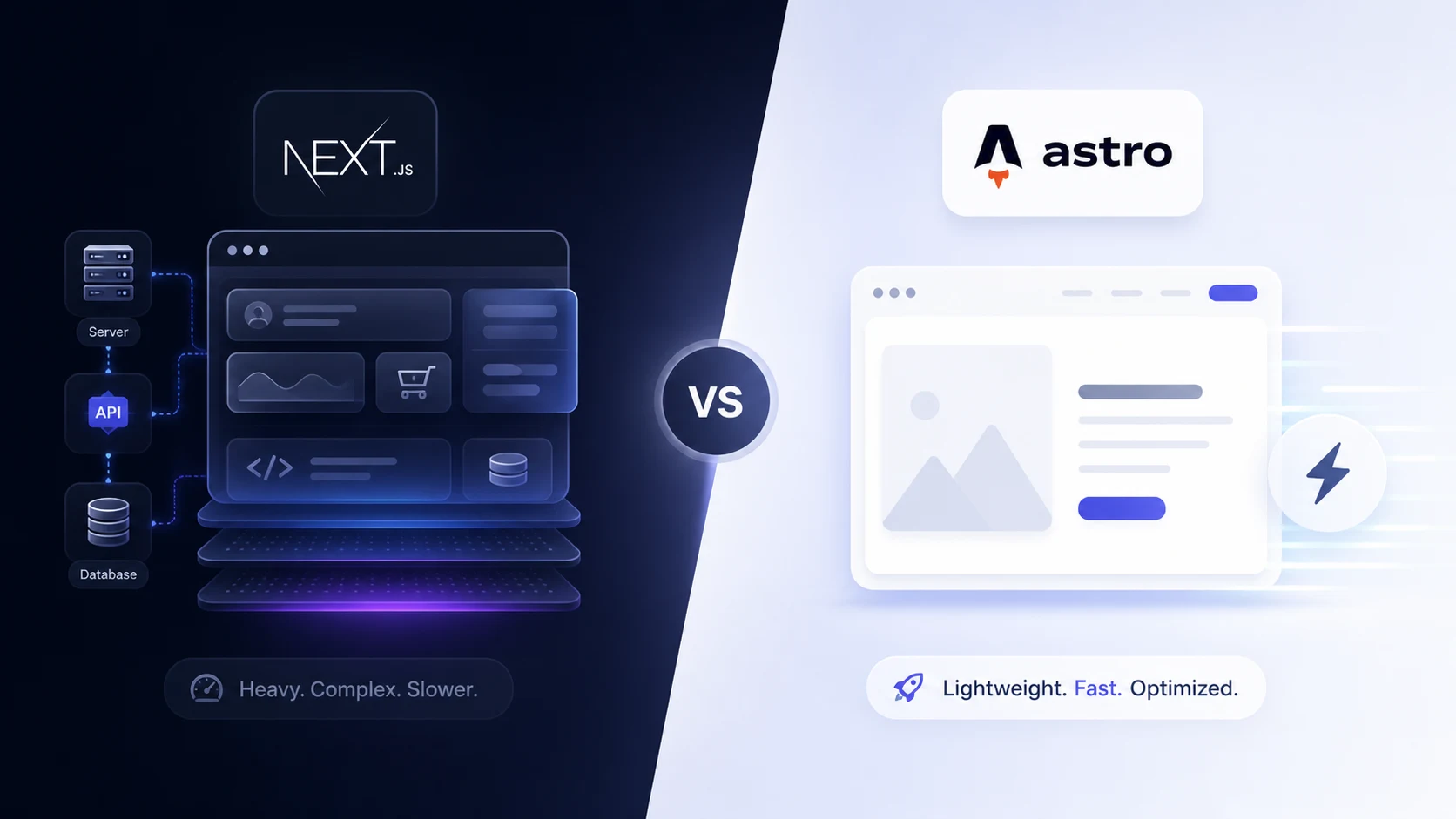
Next.js has established itself as one of the most powerful frameworks in modern web development. Its ability to handle both frontend and backend concerns makes it a popular choice for building complex applications.
However, in many real-world scenarios, especially for content-driven websites, using Next.js can introduce unnecessary complexity and performance overhead. Not every project requires server-side rendering, dynamic routing, or tightly coupled backend logic.
For these types of applications, Astro provides a more efficient and purpose-built solution. Choosing Astro over Next.js in the right context can significantly improve performance, simplify architecture, and deliver a better user experience.
Astro’s Content-First Approach
Astro is designed specifically for delivering fast, content-focused websites. It generates static HTML by default and avoids sending unnecessary JavaScript to the browser.
Unlike traditional frameworks that rely heavily on hydration, Astro uses an “islands architecture,” where interactivity is added only where needed. This ensures that most of the page remains lightweight and fast.
- Zero JavaScript by default
- Selective hydration for interactive components
- Optimized content delivery
Why Astro Outperforms Next.js in Many Cases
When Next.js is used for static or content-heavy pages, it often includes additional JavaScript for hydration and runtime behavior. While this enables flexibility, it also increases bundle size and affects loading performance.
Astro avoids this overhead by shipping only what is required. This results in faster rendering, better responsiveness, and improved performance across devices.
- Smaller bundle sizes
- Faster first contentful paint
- Better performance on slower networks
Where Astro Clearly Has the Advantage
Blogs and Documentation Platforms
Content-heavy platforms benefit the most from Astro’s static-first approach. Since the content does not change frequently, pre-rendering pages ensures instant loading and strong SEO performance.
- Fast and consistent page loads
- Optimized for search engines
- Simplified content workflows
Landing Pages and Marketing Websites
For marketing-driven websites, performance plays a critical role in user engagement and conversion. Astro ensures minimal load times by eliminating unnecessary JavaScript.
- Lightweight frontend
- Improved Core Web Vitals
- Lower infrastructure requirements
Frontend for Decoupled Architectures
In modern architectures, the frontend and backend are often separated. Astro works effectively as a fast presentation layer while backend services handle business logic.
This separation improves scalability and allows each part of the system to evolve independently.
CMS-Driven Websites
Astro integrates seamlessly with headless CMS platforms, making it ideal for managing large volumes of content while maintaining performance.
- Clear separation of concerns
- Flexible content management
- High-performance frontend delivery
Simplifying Architecture with Astro
One of the most practical benefits of Astro is its simplicity. By focusing on static delivery and selective interactivity, it reduces the need for complex configurations and runtime logic.
This results in easier deployments, lower hosting costs, and a more maintainable codebase.
When Next.js Still Makes Sense
While Astro offers clear advantages for content-driven applications, it is not designed to replace Next.js entirely.
- Applications requiring real-time updates
- Highly interactive user interfaces
- Projects that depend on integrated backend features
In these cases, Next.js remains the more suitable option due to its dynamic capabilities.
Conclusion
Choosing Astro over Next.js is not about dismissing one framework in favor of another. It is about selecting the right tool based on the needs of the project.
For content-driven and performance-focused websites, Astro provides a more streamlined and efficient approach. It eliminates unnecessary complexity while delivering a fast and reliable user experience.
Making thoughtful architectural decisions ultimately leads to better products and more maintainable systems.
Guideline:
- Use Astro for content-heavy, SEO-focused websites
- Use Next.js for dynamic, interactive applications